
Gold Wahi,
Soch Nayi
Scroll DownGold has evolved
From locker to portfolio
The form may have changed. The value of gold hasn't.


Why does gold still
matter today?
From being passed down as jewellery to becoming a part of modern portfolios, gold has evolved with us.
It can play an important role in a diversified portfolio by offering exposure to an asset class that behaves differently from equities and other investments.
Gold has changed with the times. Your way of investing in it can too.
Where does gold fit during
uncertain times?
2008
Global Financial Crisis
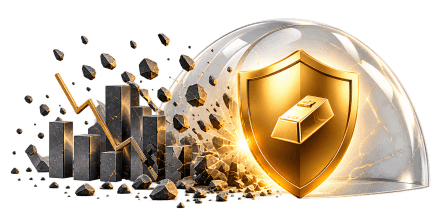
Markets fell sharply.
Gold demonstrated its potential as a defensive asset.
Things to consider before choosing the
Gold ETF/Gold FoF
Before you invest, look beyond just the gold price.
Here are a few things worth evaluating:
- 01
Tracking Difference
How closely does the fund follow the price of gold?
Look at how closely the scheme's performance tracks its underlying benchmark, after expenses and other factors.
- 02
Expense Ratio
What does it cost to invest?
Check the expense ratio and understand how costs can affect your investment over the long term.
- 03
Liquidity
How easily can you buy or sell?
For Gold ETFs, look at trading volumes, bid-ask spreads, overall liquidity, and other relevant factors on the exchange.
- 04
Costs beyond the fund
Look at the complete cost of investing.
For ETF: You pay a brokerage fee to trade it, plus the everyday transactional costs of running that single fund.
For FoF: You pay the FoF's own costs, plus the additional transactional costs and trading fees of every underlying ETF it holds.
Why consider gold in
your portfolio?
Your portfolio has different jobs.
Gold can play one of the important ones.
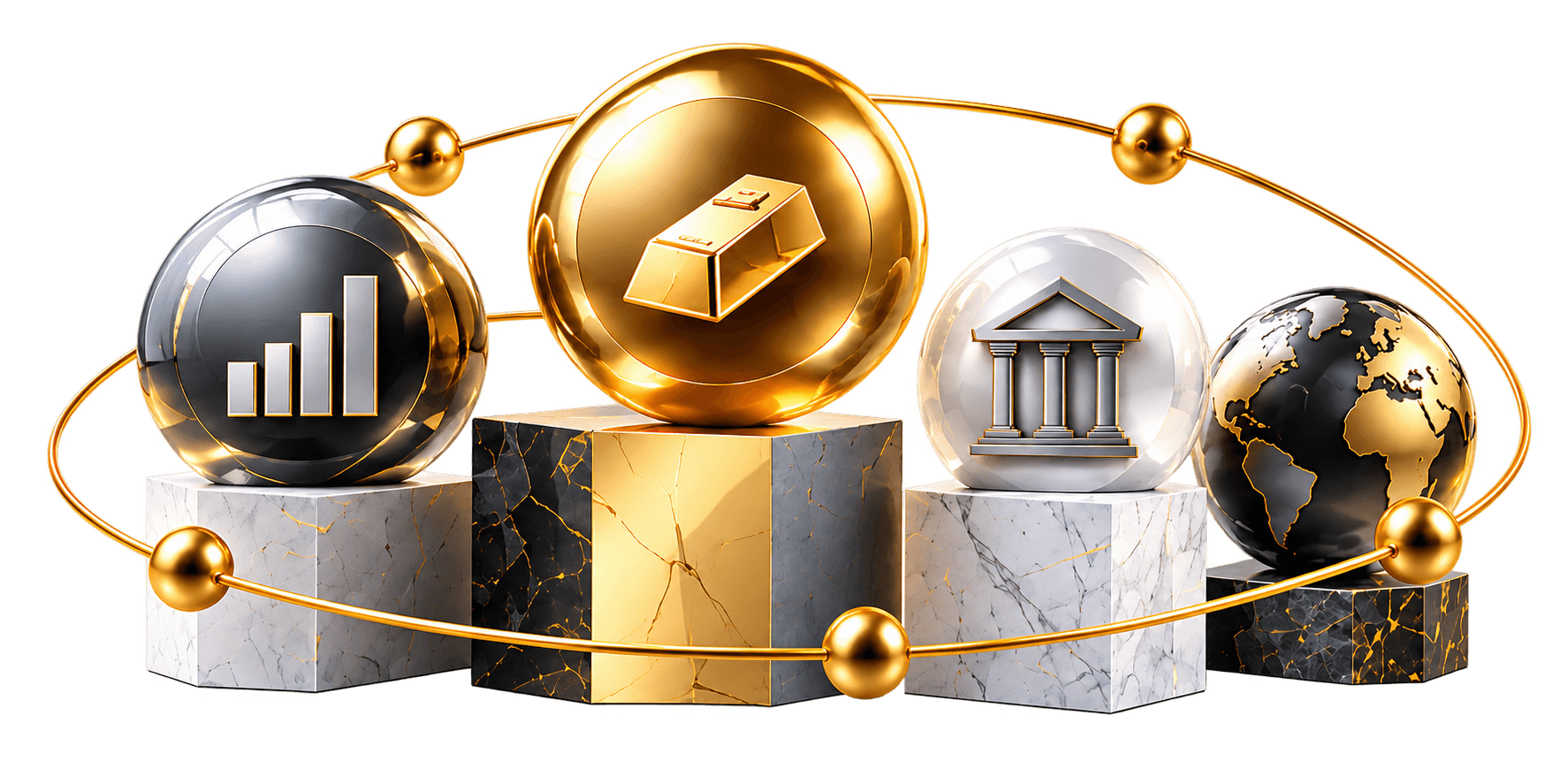
Add an asset that can complement your equity investments.
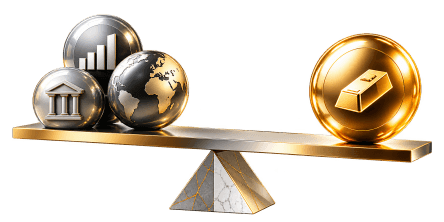
Gold can behave differently from equities, helping diversify portfolio risk.
Gold is often considered a hedge during periods of economic or market uncertainty.
Gold has retained its relevance across generations.

Don't predict the next
market move.
Prepare for different market environments.
Frequently Asked Questions (FAQs)
A Gold ETF (Exchange Traded Fund) is a mutual fund scheme that aims to track the price of gold and is listed on a stock exchange. Investors can buy and sell units through their demat and trading account, similar to shares.
A Gold Fund of Fund (FoF) is a mutual fund scheme that primarily invests in units of a Gold ETF. It allows investors to gain exposure to gold without needing a demat account.
A Gold ETF is bought and sold on a stock exchange through a demat and trading account, while a Gold FoF can be invested in directly through a mutual fund platform without a demat account. Both aim to provide exposure to gold prices.
No. Investing in a Gold ETF or Gold FoF gives you exposure to the price of gold through financial instruments. You do not receive physical gold.
Liquidity refers to how easily investors can buy or sell ETF units on the stock exchange. Higher liquidity can help facilitate transactions with potentially lower bid-ask spreads.
Investment minimums depend on the platform and scheme. Investors can typically start with relatively small amounts, subject to the applicable investment requirements.
Investors should consider factors such as investment convenience, account requirements, costs, liquidity, investment objectives, and overall portfolio needs before making an investment decision.
Gold is often viewed as a potential long-term store of value and may play a role in a diversified portfolio. However, there is no assurance that gold will always outperform inflation or deliver positive returns.